Datahub
Overview
The shopreme DataHub enables a standardized communication between the shopreme ecosystem and the retailer infrastructure by offering a set of outbound and inbound API endpoints: HTTP Rest interfaces with JSON Payload. These make the shopreme ecosystem work throughout the user journey: from store detection on the client app to downloading a receipt after a successful purchase.
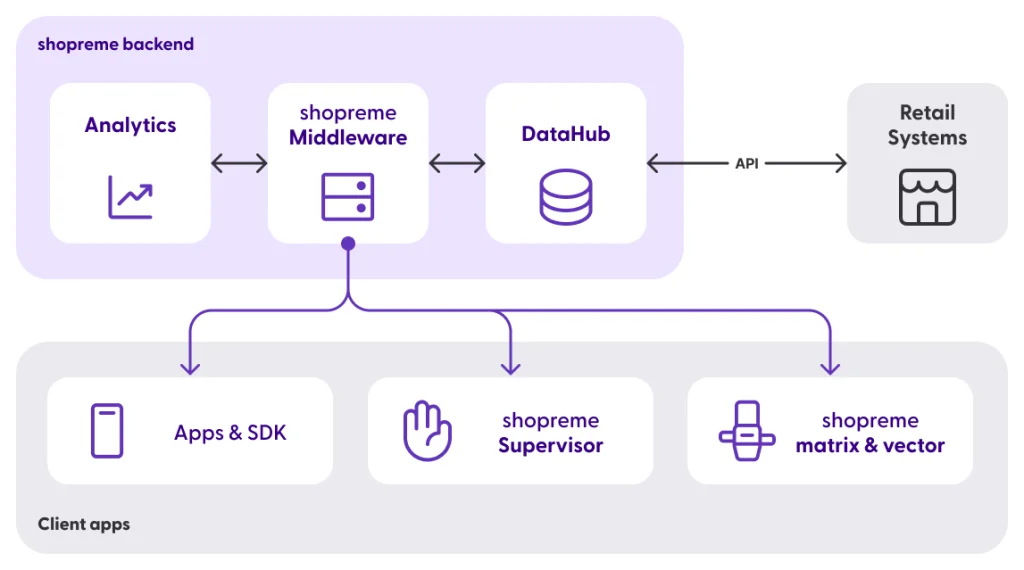
The following high-level diagram summarizes the data flow across the customer app, the shopreme Middleware, and other external (retailer) systems.
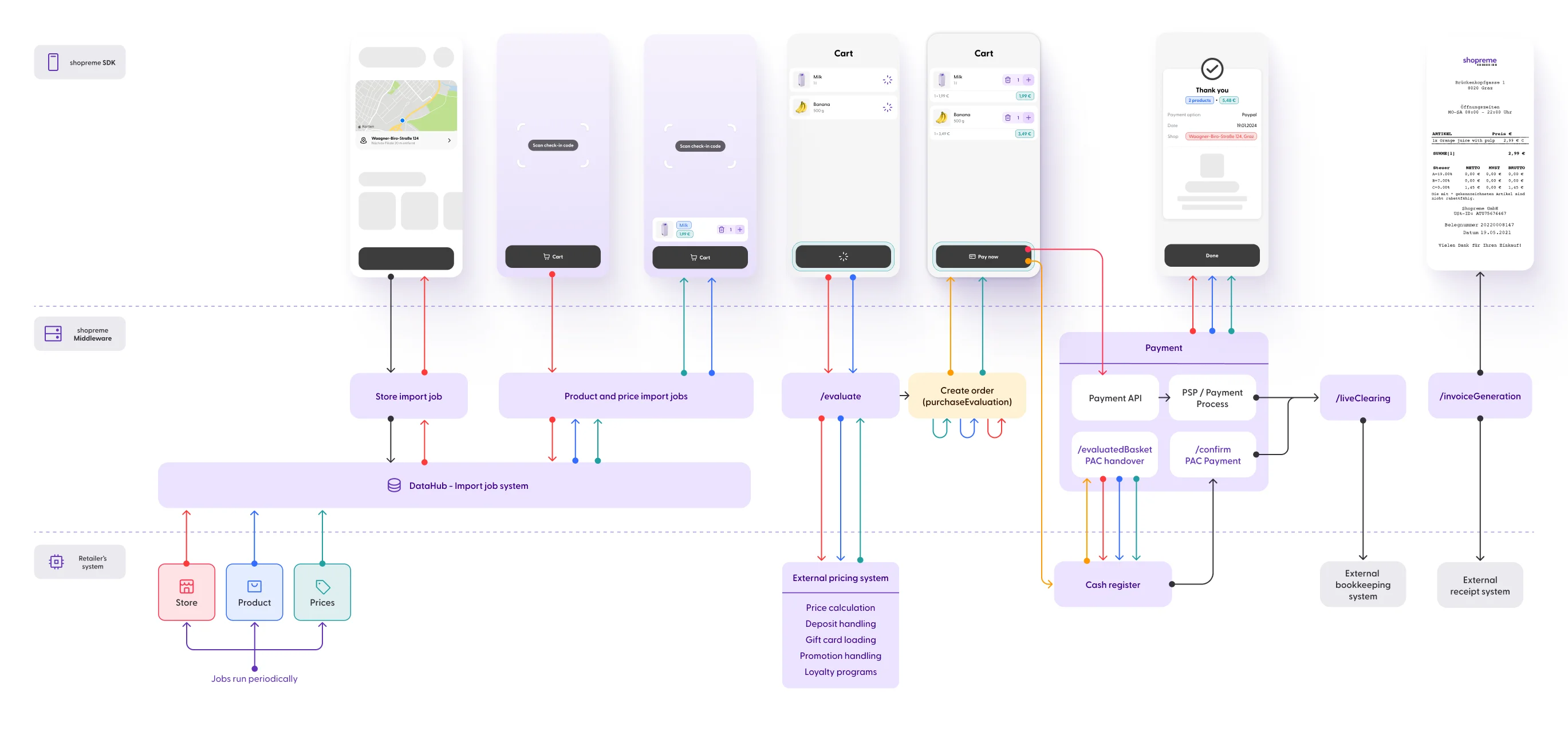
The most important concept to highlight is that during the first three “steps” in the user journey (customer app), the data used in the app is provided directly from the Data Import on the shopreme Middleware. In other words, store detection, product scanning, and product details use the data directly imported to the Management Console through jobs that run periodically.
Later on, once the customer visits the Cart view in their customer app, the use of external systems starts: the /evaluate endpoint sends a request with the product information to receive a confirmation of any pricing, promotions, loyalty information, and more. Please take a look at the Baskets and Pricing section for more details.
Tapping “Pay now” on the customer app triggers our internal payment process. Depending on your specific implementation, different endpoints will be used. For example, if there are in-store physical cash registers, the “Pay at cash register” endpoints will be required – you can find more details about Pay at Cash Register here.
At the end of the user journey, the outbound clearing endpoints provide the transaction information to the retailer’s bookkeeping system. You can read more details about these endpoints here. If you also generate receipts through an external receipt system, the information in the Fiscalization and receipt-creation section will provide more details.