Management Console
matrix management details
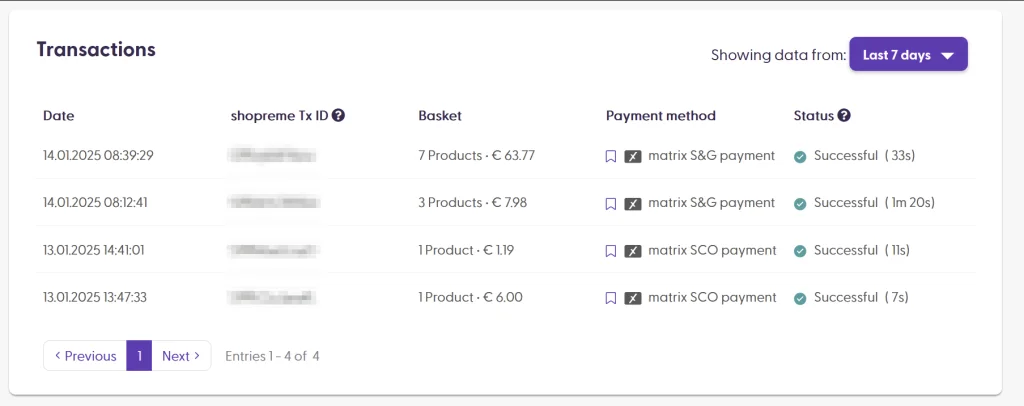
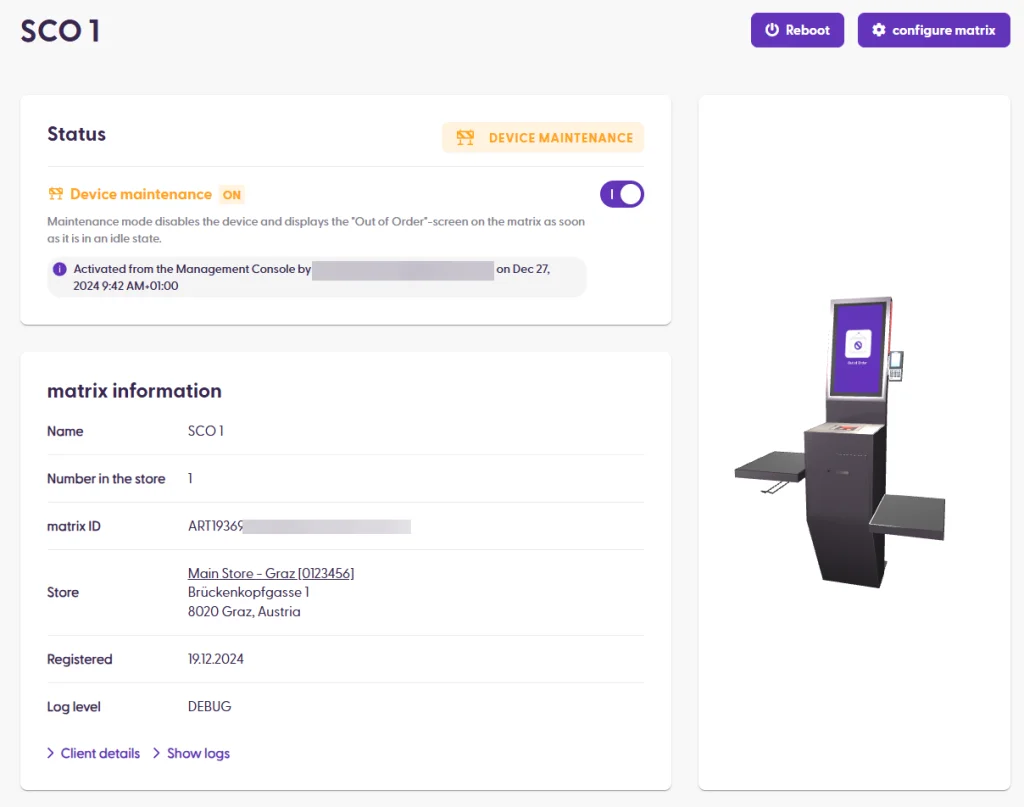
Each matrix has its own detail page that provides an overview of the device’s status. For example, the matrix information section displays the matrix ID, registration date, and log level. You can also see the store name and its external ID in the “Store” line.
Clicking “Client details” displays the current screen on the matrix app, network information, and the last status reported by the device within the heartbeat.
Tags
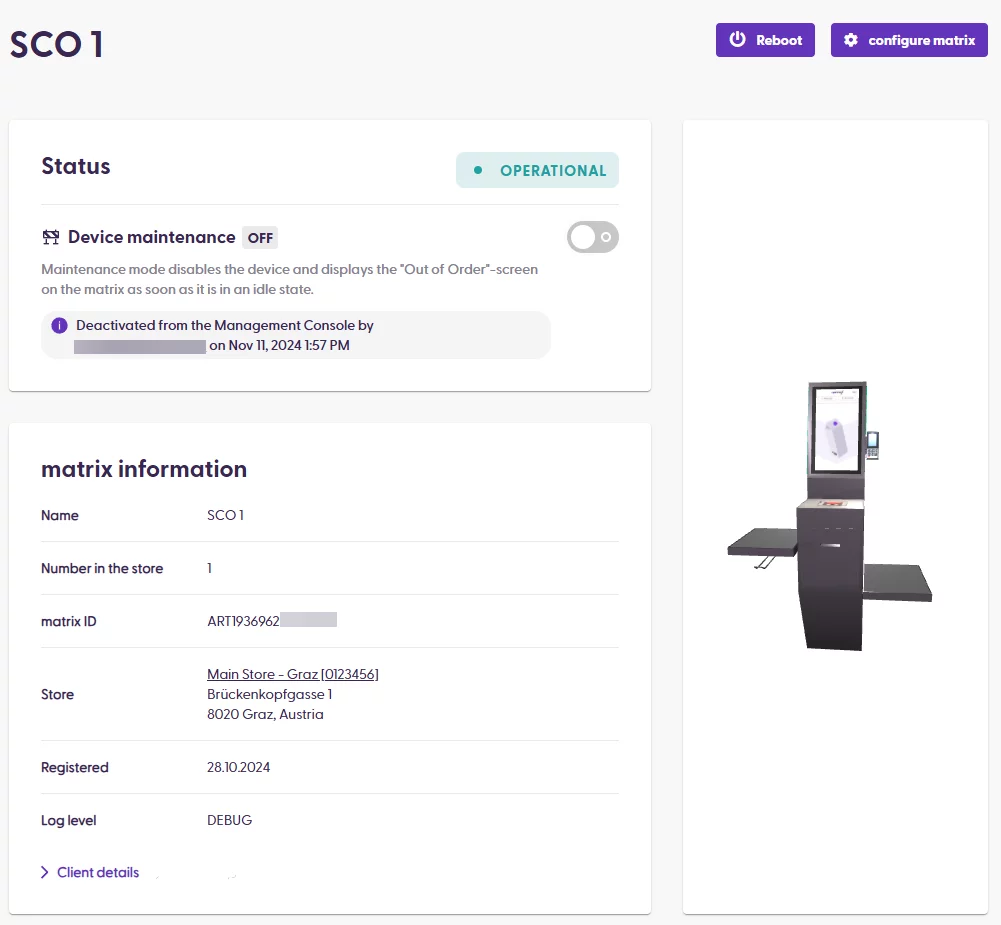
Beneath the vector information section, you can see what tags a device has. Each matrix can have up to 4 custom tags to help you keep track of any specific details. Each tag has a limit of 55 characters.

When editing the tags, you will be suggested tags which already exist that match the characters you have entered:
Hardware components
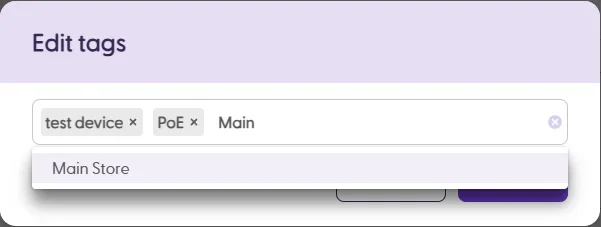
This section refers to the hardware parts within the matrix, such as the Android unit, nexus board, Scanner, printer, and more.
Unlike the vector, all hardware components of the matrix are the essential to consider a device operational. The payment terminal and printer are required to pay for shopping baskets and print receipts, respectively. You can see the printer model name, as well as the serial number of the payment terminal within this section. The payment terminal serial number format will depend on the PSP set up for your server. Please note that the payment terminal can be updated if needed by clicking the ‘configure matrix’ button at the top of the page.
The nexus board controls the power supply to all other components, and the Android unit refers to the screen and computing component (“tablet”).
Beacons help shoppers check in to a store when they open the Scan & Go app. This is done by detecting the Beacon’s major and minor IDs, which should match the current store’s registered ones. You can verify each matrix’s beacon IDs in this section as well.
Device maintenance mode
It is possible that employees need to set a specific device as “out of order” – perhaps if there is an accidental spill of milk on the device, or if the matrix’s screen is cracked. In any case, the device specific Out-of-Order mode can be enabled either from the matrix Settings screen or the matrix details page in the Management Console.
On the matrix details page, the Out-of-Order state can be enabled or disabled by toggling the button on the Device Maintenance area. This will send a push notification to the matrix SCO and it will be set to out of order once it is in “Idle” state (not in use by any customer).
It is also possible to override the state remotely if it was set up from the Settings screen. This means that if an employee set the device as “out of order” by mistake or if they forgot to remove this status, a Management Console admin can set the device as “Operational” again from the details page.
Transactions
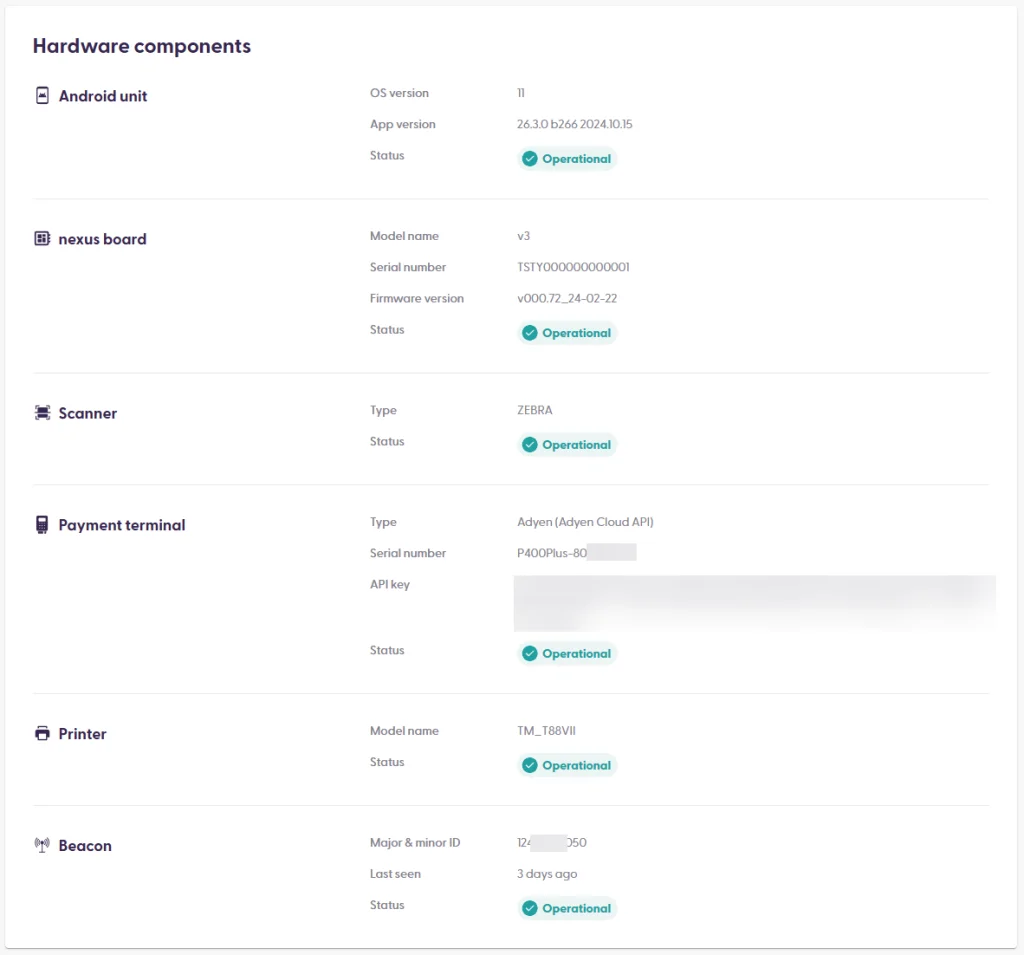
For each shopreme matrix, there is also a transactions list on this page. This list allows you to filter per day and have an overview of the last transactions completed on this device.
At the bottom of the detail page, you will find a list of the device’s most recent transactions. This provides a list that you can filter per day to have an overview of the last transactions completed on this device. Clicking on any transaction in the list will take you to its detailed transaction page.